CRITICAL READING #2: Disability Critical Race Theory
Dis/ability critical race studies:
What resonated with me from this reading was how prominent the relationship and intersectionality between race and dis/ability is in society. I am well aware of how racism is (sad to say) an integral part of this country. Given this knowledge, I must admit that I was still shocked and initially baffled on how being a person of color is equated to someone who has a dis/ability. How being non-dominant racial, ethnic, and linguistic continue to be referred, labeled and placed in special education, particularly in the categories of LD, Intellectual Disability, and Emotional Disturbance or Behavior Disorders.
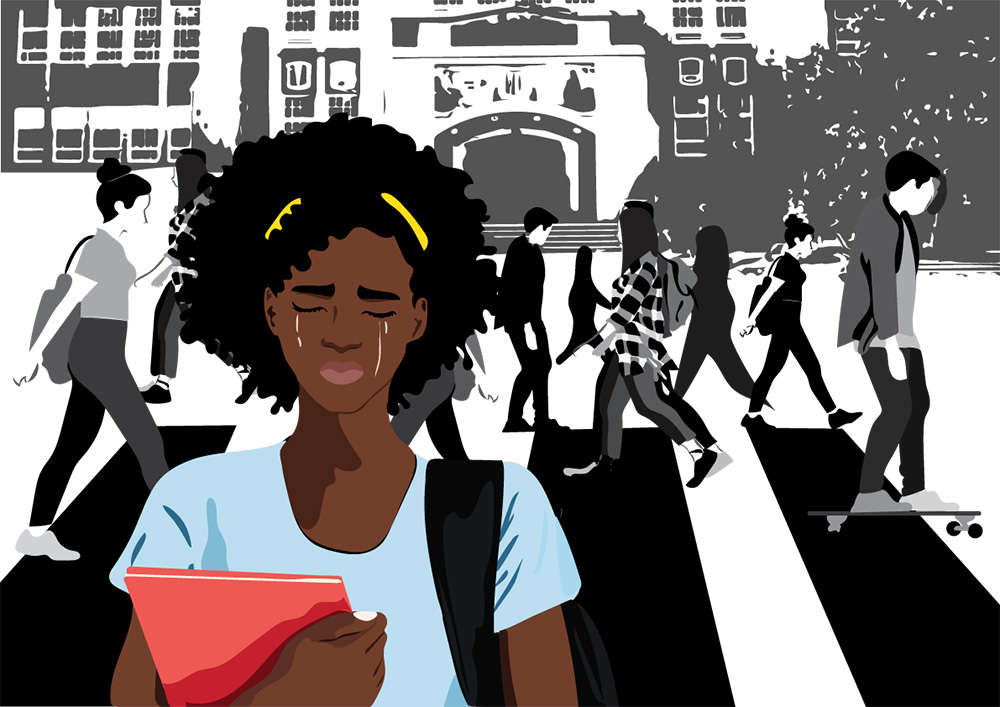 In the introduction, it was discussed how throughout history, some people were trying to prove individuals of African descent possessed limited intelligence and were therefor not quite fully human. Just writing this down makes me cringe as it is just utterly stupid how people would arrive with such conclusion. Of course, all these studies and assumptions were clearly based on white supremacy. It is frustrating and saddening how people of color even up to this day is being viewed as inferior to their white counterparts. That in some places in the US, this kind of mentality and treatment of people of color still exists and it is deemed "okay/ normal". I do like the face that DisCrit recognizes that to be of color does not make one dis/abled and to be labeled dis/abled does not make one of color.
In addition to this, another statement that really hit me hard was how individuals who are part of the LGBTQ family/ group are labeled as disabled. Being a gay person myself, I've battled being labeled as "not normal" or being sick my entire childhood. The difference is, I was in the closet all those years that I was in school and so I wasn't really treated differently. In addition, in the country where I grew up, kids who are openly gay don't get labeled as such in schools. Worst that they get would be bullying from their classmates but even that wasn't as "bad"/ extreme as cases here in the US.
My key takeaway from this reading is that the consequences of simply being labeled as disabled, even if one does not claim that identity, can result in rejection from people/ groups in his/her community. Working in a field where I serve and support individuals who are diagnosed with intellectual and developmental disabilities, I see this mentality and treatment even up to this day. To make matters worse, a lot of the folks I support cant advocate for themselves and so it is crucial that people who work in this field stand as allies to these individuals to ensure that their rights are being respected and protected.
 I will admit that I was a little confused after reading this article in a way that I'm unsure of the message that the author/writer was trying to convey. My key takeaway (unsure whether I'm right or wrong) is that LD in a social constructivist lens depends on the accompanying actions and happenings in a given situation. That someone's learning identity is a "relationship nucleus... a self-sustaining system of coordinated actions".
In addition, what resonated with me was the idea that in a deficit perspective, the common response to the appearance of learning failure it to ask, what's wrong with this kid? However, through a social constructivist lens, it takes into account the contexts in which actions take place. It's not as simple as identifying that the kid/ student nor the teacher is the problem.
#APeoplesJourney: Intersectionality:
My takeaway from this video is how people of color continuously fight to attain equality. It shows how non-white people have to constantly assert their existence and rights to have a chance on getting heard, seen and treated equally.
CONCLUSION:
 With these 3 readings, one commonality I found was how being different (non-white, sex/gender, dis/abled) entails more work in attaining equality. That being white still gives someone an upper hand on how society views and treats them, even if they are labeled as disabled. In one of the readings, it was highlighted that a white student with LD would most likely have better support from his/her peers and community than that of someone who is non-white. Unfortunately, this is still the reality in a lot of parts of the country.
CONCLUSION:
With these 3 readings, one commonality I found was how being different (non-white, sex/gender, dis/abled) entails more work in attaining equality. That being white still gives someone an upper hand on how society views and treats them, even if they are labeled as disabled. In one of the readings, it was highlighted that a white student with LD would most likely have better support from his/her peers and community than that of someone who is non-white. Unfortunately, this is still the reality in a lot of parts of the country.
Thanks for these thoughtful reflections Jim!
ReplyDelete